CLK-15 One reset net shared by the MCU and its peripherals¶
| Severity | Status | Implementation |
|---|---|---|
| warning | runs in better_erc | easy, depends on IMP-1 |
Data it needs: graph, part classes, rails.
Looks at. Reset pins of all parts on the net.
What it catches. The MCU's reset pin and the reset inputs of peripherals on one net.
Why it matters. Any reset of the MCU (debugger, watchdog, software reset, which on STM32 all drive NRST low, AN5096 §1.3.2) then resets every peripheral: configurations are lost on each firmware restart, a debugger reset during bring-up takes the whole board down, and a peripheral the MCU needs during recovery is held in reset (the same trap as IO-13).
Example. An MCU and an Ethernet PHY on one NRST net: every software reset re-runs the PHY's strap latch and auto-negotiation, dropping the link for two seconds on each firmware update.
How to check. Nets that carry the reset pin of a controller and reset pins of other parts (IMP-1).
Fix. Give peripherals their own reset from a GPIO (with a pull, IO-13) or from the power supervisor, and keep the MCU's NRST for the MCU and the debugger.
References. AN5096 §1.3.2; USB251xB §5.5.1 (what a hub loses on reset).
Test schematics¶
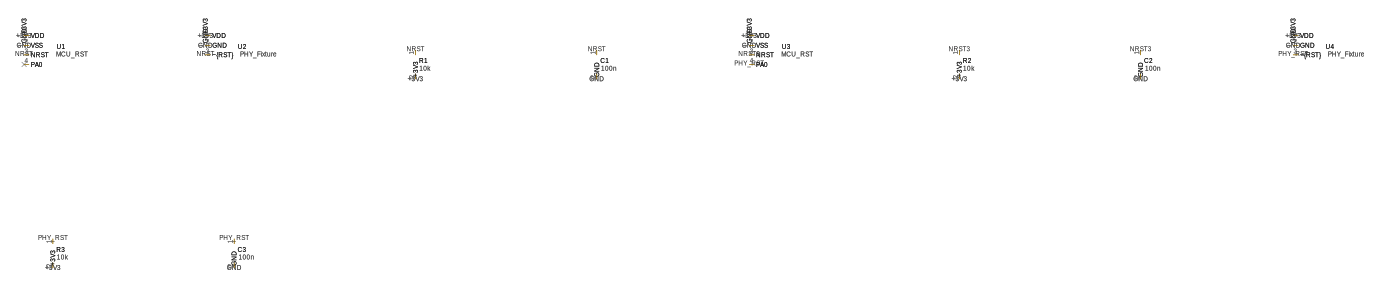
Each schematic below is in test_schematics/sources. The block under it is what berc check --only CLK-15 reports on it.
clk-15_shared_reset¶